


Paintless Dent Repair vs Repainting: Which Fix Does Your Car Need?
A dent does not always mean a repaint. Learn when paintless dent repair can preserve the original finish and when bodywork and paint are the better choice.
In this article
A small door or fender dent can look straightforward, yet the right repair depends on the paint, panel shape and what sits behind the damage. Paintless dent repair (PDR) may preserve the original finish. Another dent may need bodywork and paint, while damage caused by a harder impact deserves a closer inspection first. This guide helps you ask the right questions before approving the work.
The quick answer: PDR or a repaint?
- Consider PDR when the dent is relatively shallow, the paint remains intact and a technician can reshape the panel safely.
- Consider bodywork and paint when the finish is cracked, peeling or scratched through to lower layers, or the panel needs further reshaping and refinishing.
- Start with an inspection after a stronger collision, or if door gaps, lights or sensors have changed. A neat-looking outer panel does not rule out hidden damage.
The final choice depends on the panel material, access, previous repairs and vehicle maker instructions. A distant photo or dent diameter alone cannot settle it.
How does paintless dent repair work?
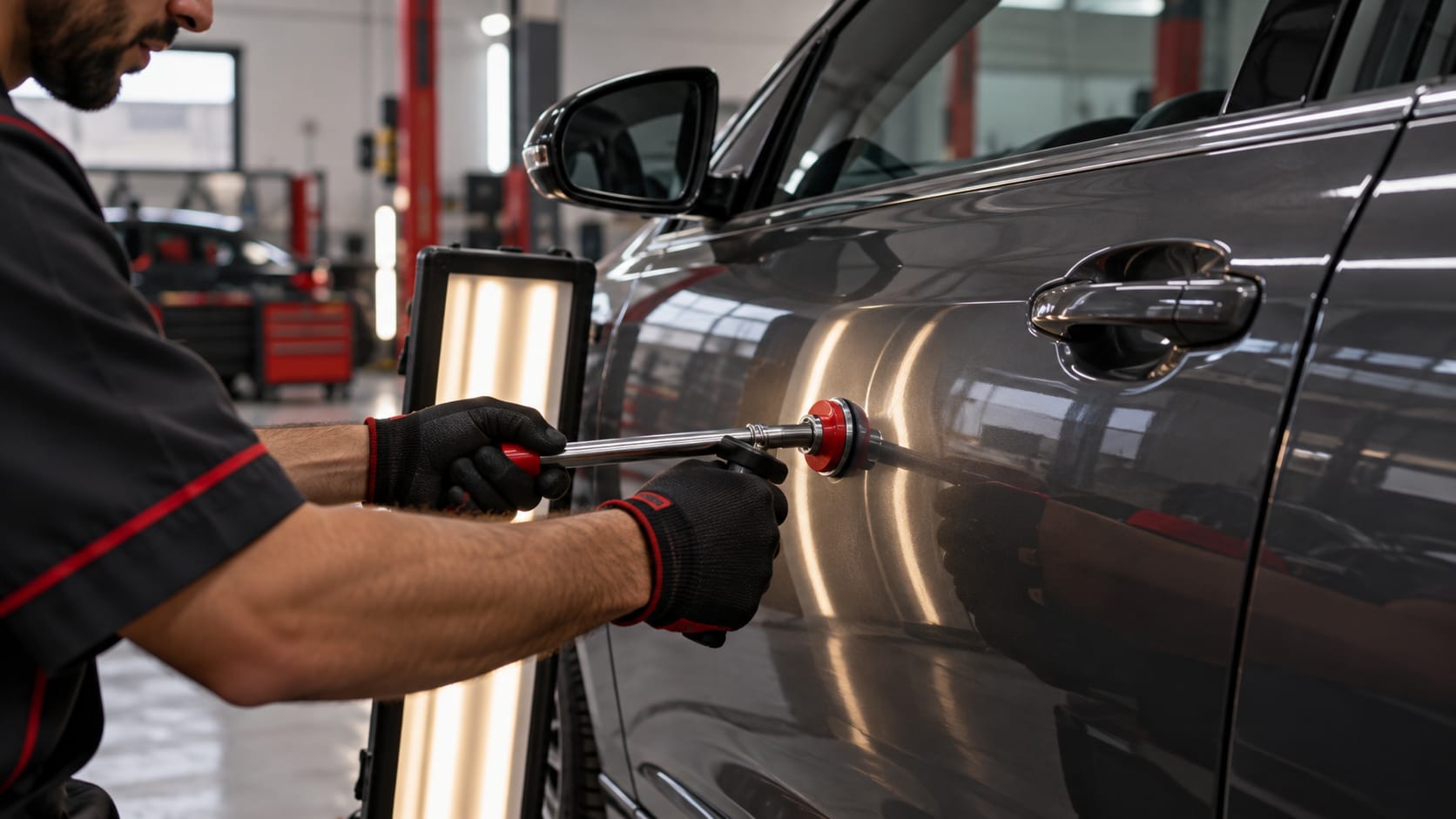
PDR gradually restores the metal panel's shape without stripping and repainting its existing finish. A technician may work from behind the panel with specialist tools or pull from the outside when the finish and panel allow it. Reflection lighting helps reveal subtle high and low spots as the shape is corrected.
Access matters. Some locations, sharp body lines, panel materials and previous repairs make the method less suitable. I-CAR's repair guidance (opens in a new tab) warns against drilling access holes for PDR; if safe access requires that, another repair plan is needed. The aim is to preserve sound original paint, not to force a method onto every dent.
When is PDR worth considering?
A parking-lot door ding or a limited fender or hood dent is a good candidate to assess when the paint still looks sound. Encouraging signs include:
- No visible paint cracking, peeling or deep gouges.
- No sign that a structural part or important mounting point was affected.
- Safe access to the damaged area without an unapproved panel modification.
- A panel that has not been sharply folded or heavily stretched at an edge.
These are screening clues, not a diagnosis. Close inspection may still reveal fine cracks or damage behind the surface. Ask the technician to explain the expected result before work starts. See SpareBox's paintless dent repair service for the service scope.
When do bodywork and paint make more sense?
If the paint has cracked, a scratch reaches the layers beneath it, or the panel has substantial deformation, restoring the metal shape alone will not restore the finish. A repair may involve panel straightening, surface preparation, colour matching and refinishing. Replacement may be necessary in some cases after an inspection and a review of the manufacturer's repair instructions.
A paint scratch and a metal dent are different problems. A scratch can require paint work even with no dent, while a dent can sometimes be corrected without spraying if the finish is sound. The bodywork and painting service covers the external repair path when the finish is part of the damage.
A practical comparison
| Question | Paintless dent repair | Bodywork and paint |
|---|---|---|
| Does the original paint stay? | Usually, if the repair succeeds and the finish is sound | The damaged area is refinished |
| Does it repair a deep scratch? | No; damaged paint needs separate attention | Yes, within an appropriate repair plan |
| Does it suit every dent? | No; shape, location and access matter | Covers more situations, subject to inspection |
| How are time and cost decided? | After assessing the dent and access | After defining preparation, paint and any parts needed |
Neither method is automatically faster or cheaper for every vehicle. Compare estimates that describe the actual work, the expected finish and whether dismantling or additional damage is included.
Four useful checks before handing over the car
Photograph the dent in natural light from two angles and capture the paint and panel edges close up. Then ask:
- Is the paint cracked or previously repainted? It may react differently to pulling or pressure.
- Is the dent near an edge or body line? These areas can be harder to restore cleanly.
- Is anything damaged behind the panel? Brackets or nearby parts may be affected even when the visible dent is small.
- What result is realistic? Ask what can be corrected and what might still be visible.
If the dent followed a collision or the door no longer closes or aligns correctly, book an inspection and diagnosis before choosing a cosmetic repair. The part's function and vehicle safety come first.
Frequently asked questions
Does PDR preserve factory paint?
Preserving the original finish is its purpose, provided the paint is sound and the repair can be completed without damaging it. A technician needs to assess the panel before promising a result.
Can hail or parking dents be repaired without paint?
Some small or moderate dents with intact paint can be suitable. The number and location of dents, as well as the panel edges, determine the repair plan. Each car needs its own assessment.
What if the dent also has a deep scratch?
The metal may be reshaped, but the damaged paint can still need separate repair. Once the finish is cracked or exposed, the entire job should not be described as paint-free.
What to do next
Send clear photos, the car model and year, and the location of the dent through the contact and booking page. The SpareBox team can guide you toward an assessment for PDR or bodywork and paint based on your vehicle.