


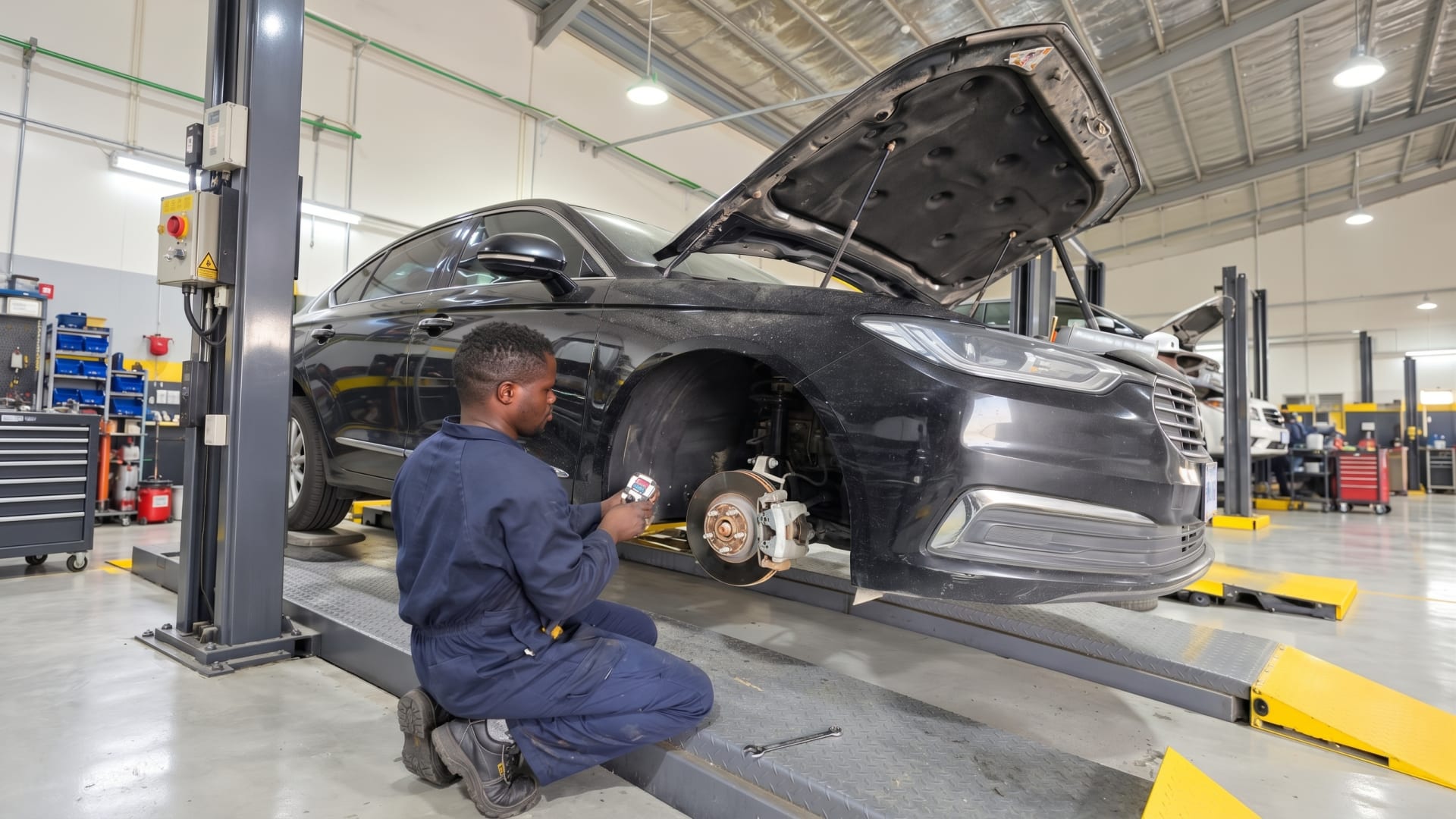
Service overview
Diagnosis and repair of mechanical faults in the engine, transmission, suspension and brakes.
Mechanical repair deals with faults in the engine and the systems that move and stop the car: the transmission, suspension, steering, brakes and cooling.
The fault is diagnosed first, and you get an explanation of the problem and the cost before the repair starts.
- Diagnosis before repair
- Engine and transmission faults
- Suspension, steering and brakes
On this page
Signs your car needs mechanical attention
- Knocking, grinding, squealing or clunking noises
- Vibration through the steering wheel, pedals or seat
- Loss of power, hesitation or rough idling
- Oil, coolant or other fluid leaking under the car
- Harsh, slipping or delayed gear changes
- The car pulling to one side, or brakes that feel different
- The engine temperature rising higher than usual
None of these signs points to one certain fault on its own. The same noise can come from several parts, which is why the car is checked before anything is replaced.
Systems covered by mechanical repair
Engine
Faults that affect how the engine runs, from leaks and worn components to problems that reduce power or cause rough running.
Transmission and drivetrain
Gearbox, clutch and the parts that carry power to the wheels.
Suspension and steering
Components that keep the car stable and controlled, often behind knocks over bumps, wandering steering or uneven tyre wear.
Brakes and cooling
Brake components and the cooling system that keeps the engine at a safe temperature in the heat.
Diagnosis comes before parts
Replacing parts on a guess is the most expensive way to fix a car. A proper diagnosis traces the symptom to its cause first. If the fault isn't clear, start with inspection and diagnostics.
How a mechanical repair request works
- You describe the symptom: what happens, when it started and when it shows up.
- The car is inspected and the fault is identified.
- You get an explanation of the problem and the cost, and decide before work begins.
- The repair is carried out, and the car is checked or road-tested afterwards.
If a part needs replacing, it can be sourced through spare parts supply.
Preventing the next repair
Many mechanical faults start as wear that a routine service would have caught early. Keeping up with periodic maintenance reduces the chance of a breakdown.
If you're not sure which service your car needs, our guide on how to tell which service your car needs matches common symptoms to the right service. If a warning sign means the car shouldn't be driven, use flatbed towing instead.